GoodCorporate
Governance
PT Gapura Angkasa is fully committed to implementing Good Corporate Governance (GCG) standards. As a form of compliance with Minister of State-Owned Enterprises Regulation No. PER-2/MBU/03/2023, the Company periodically measures GCG implementation.
Purpose of Implementing GCG

Encouraging the achievement of corporate balance through management based on the principles of transparency, accountability, responsibility, independence, as well as fairness and equality.

Optimizing company value to build strong competitiveness, both nationally and internationally, enabling the company to maintain its existence and business sustainability in achieving its objectives and goals.

Promoting professional, efficient, and effective management of State-Owned Enterprises (SOE), while empowering the functions and enhancing the independence of each corporate organ.

Encouraging the empowerment and independence of corporate organs, namely the Board of Commissioners, the Board of Directors, and the Shareholders.

Encouraging Shareholders, the Board of Commissioners, and the Board of Directors to always make decisions and take actions based on high moral values and compliance with applicable laws and regulations.

Promoting corporate social awareness and responsibility toward the community and environmental preservation, particularly around operational areas.

Enhancing the company’s contribution to the national economy.

Fostering a conducive investment climate for the development of national investment.
To achieve these objectives, the Company is committed to implementing the fundamental principles of Good Corporate Governance (GCG), namely transparency, accountability, responsibility, independency, and fairness. These principles are consistently applied in every aspect of the Company’s operational activities. This commitment is realized through the implementation of GCG principles as follows:
01
Transparency
The principle of transparency reflects openness in every decision-making process and in the disclosure of material and relevant information. The Company is committed to providing material and relevant information transparently to all stakeholders. Information regarding performance, financial condition, and other important matters is presented clearly, accurately, adequately, timely, and accessibly in accordance with each party’s rights.
02
Accountability
The principle of accountability emphasizes the importance of clarity in the functions, implementation, and responsibilities of each corporate organ down to all work units. The Company ensures clear delineation of functions, duties, and responsibilities at every level of the organization. Thus, the Company’s management can operate effectively, efficiently, and responsibly.
03
Responsibility
The principle of responsibility underscores the importance of compliance in corporate management with prevailing laws and regulations, internal policies, and applicable Standard Operating Procedures (SOP). The Company consistently adheres to all relevant laws and regulations, manages the environment responsibly, fosters mutual relationships with business partners, and implements social responsibility programs as a form of contribution to society and the environment.
04
Independency
The principle of independency reflects professional management free from conflicts of interest and undue influence from any party. The Company upholds independence in every decision-making process by enforcing codes of ethics and policies governing all transactions and investment plans to prevent potential conflicts of interest.
05
Fairness
The principle of fairness embodies justice and equality in fulfilling the rights of all stakeholders. The Company applies the principle of equality by ensuring fair treatment to all stakeholders. Every right and obligation is carried out proportionally to create a harmonious and sustainable relationship.
Legal Basis
Legal Basis for the Implementation of Good Corporate Governance:
01
Law Number 40 of 2007 on Limited Liability Companies (State Gazette of the Republic of Indonesia Year 2007 Number 106, Supplement to the State Gazette Number 4756), as last amended by Law Number 6 of 2023 concerning the Stipulation of Government Regulation in Lieu of Law Number 2 of 2022 on Job Creation into Law (State Gazette of the Republic of Indonesia Year 2023 Number 41, Supplement to the State Gazette Number 6856).
02
Regulation of the Minister of State-Owned Enterprises Number: PER-02/MBU/03/2013 concerning Guidelines for Corporate Governance and Significant Corporate Activities of State-Owned Enterprises.
03
Regulation of the Minister of State-Owned Enterprises Number: PER-3/MBU/03/2023 concerning the Organs and Human Resources of State-Owned Enterprises.
04
The Company’s Articles of Association.
Corporate Governance Policy
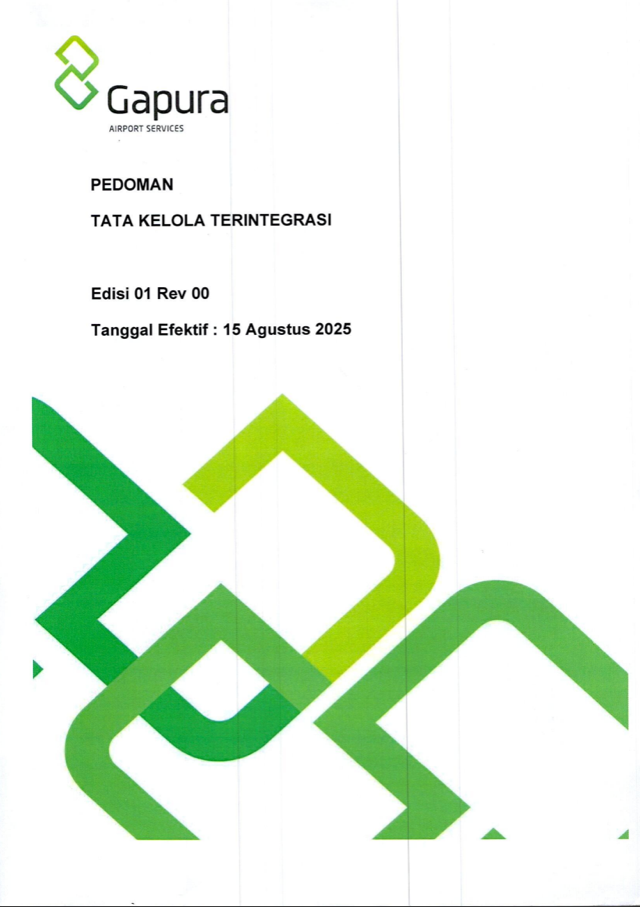
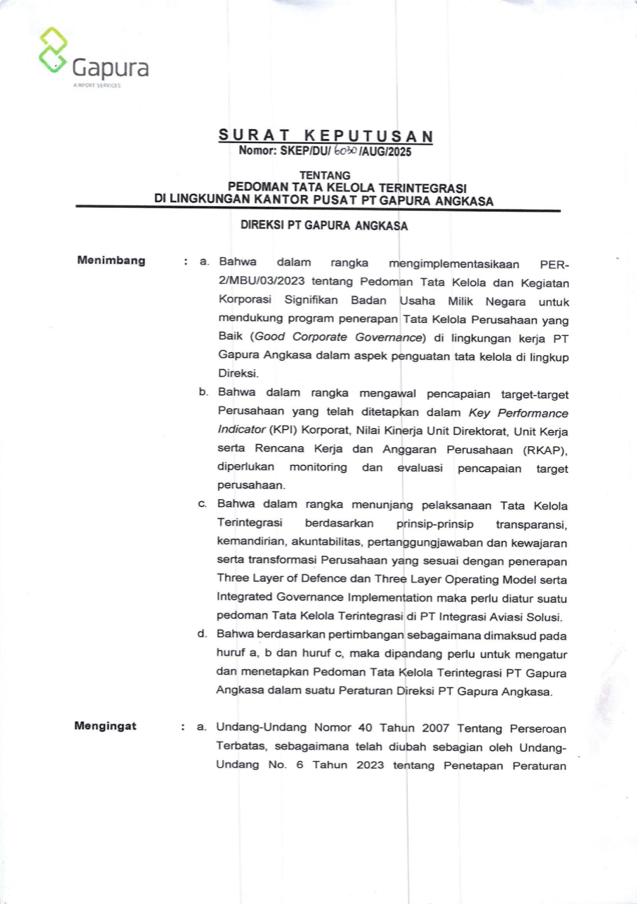
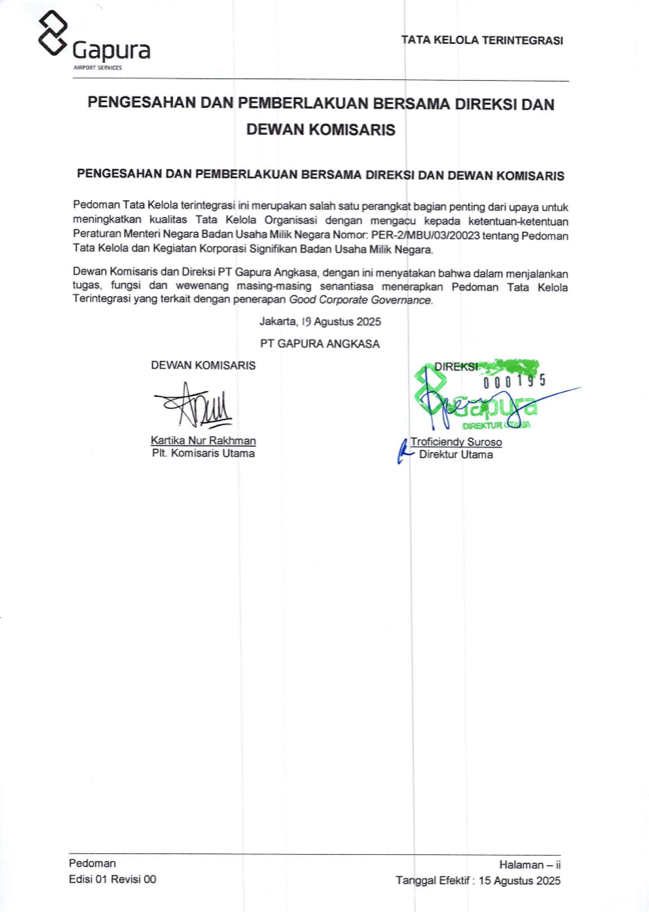
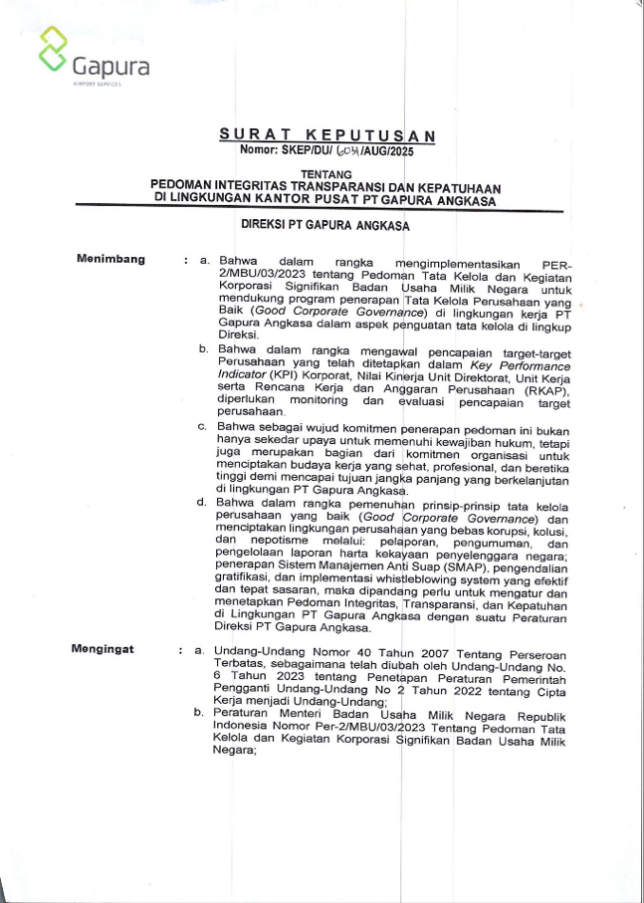
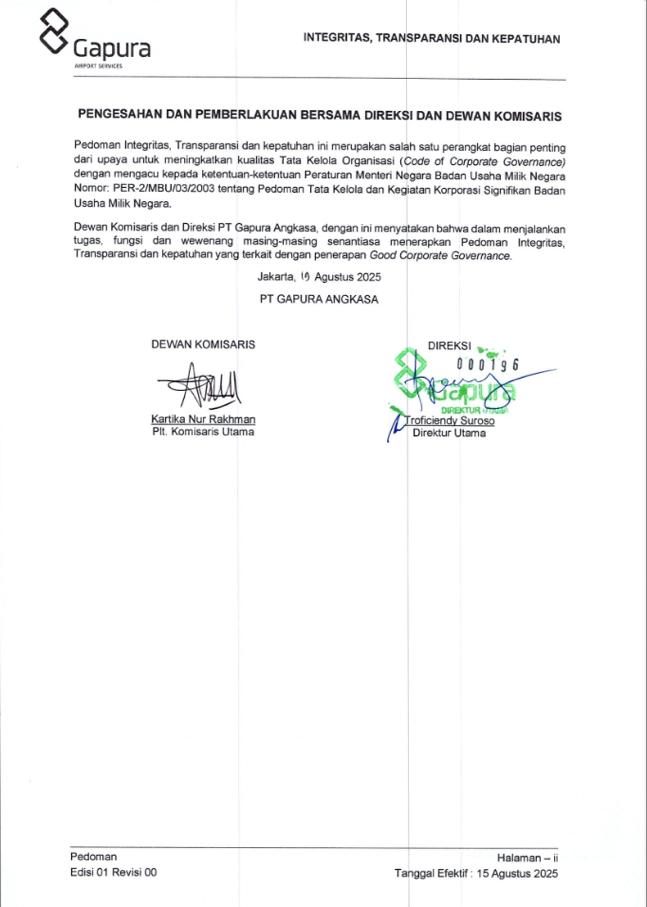
The Guidelines for the Implementation of Good Corporate Governance (GCG) at PT Gapura Angkasa refer to Decree Number: SKEP/DU/6030/AUG/2025 dated August 19th, 2025, concerning Integrated Governance Guidelines within the Head Office of PT Gapura Angkasa.
Corporate Governance Framework
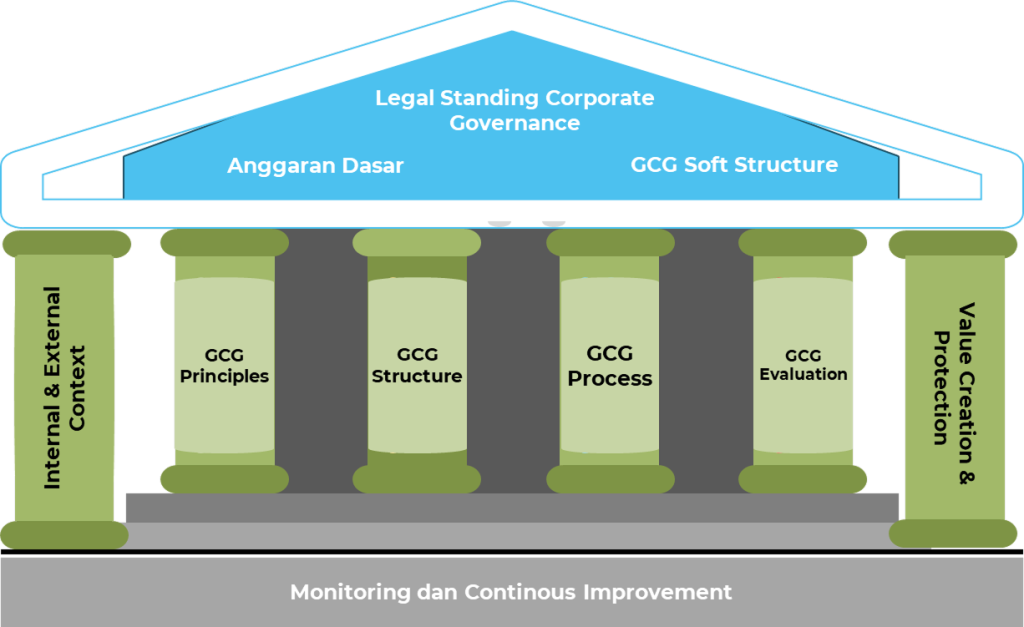
GCG Principles
- Transparency
- Accountability
- Responsibility
- Kemandirian
- Fairness
GCG Structure
- Persyaratan Organ
- Wewenang Tugas dan tanggung Jawab Organ
- Hubungan antar Organ
GCG Process
- Tata Kelola Proses Bisnis Perusahaan
- Pengelolaan Hub dengan Pemangku kepentingan
- Pengelolaan Hub dengan Induk Perusahaan
GCG Evaluation
- Penilaian GCG
- GCG Reporting
Structure of Good Corporate Governance (GCG)
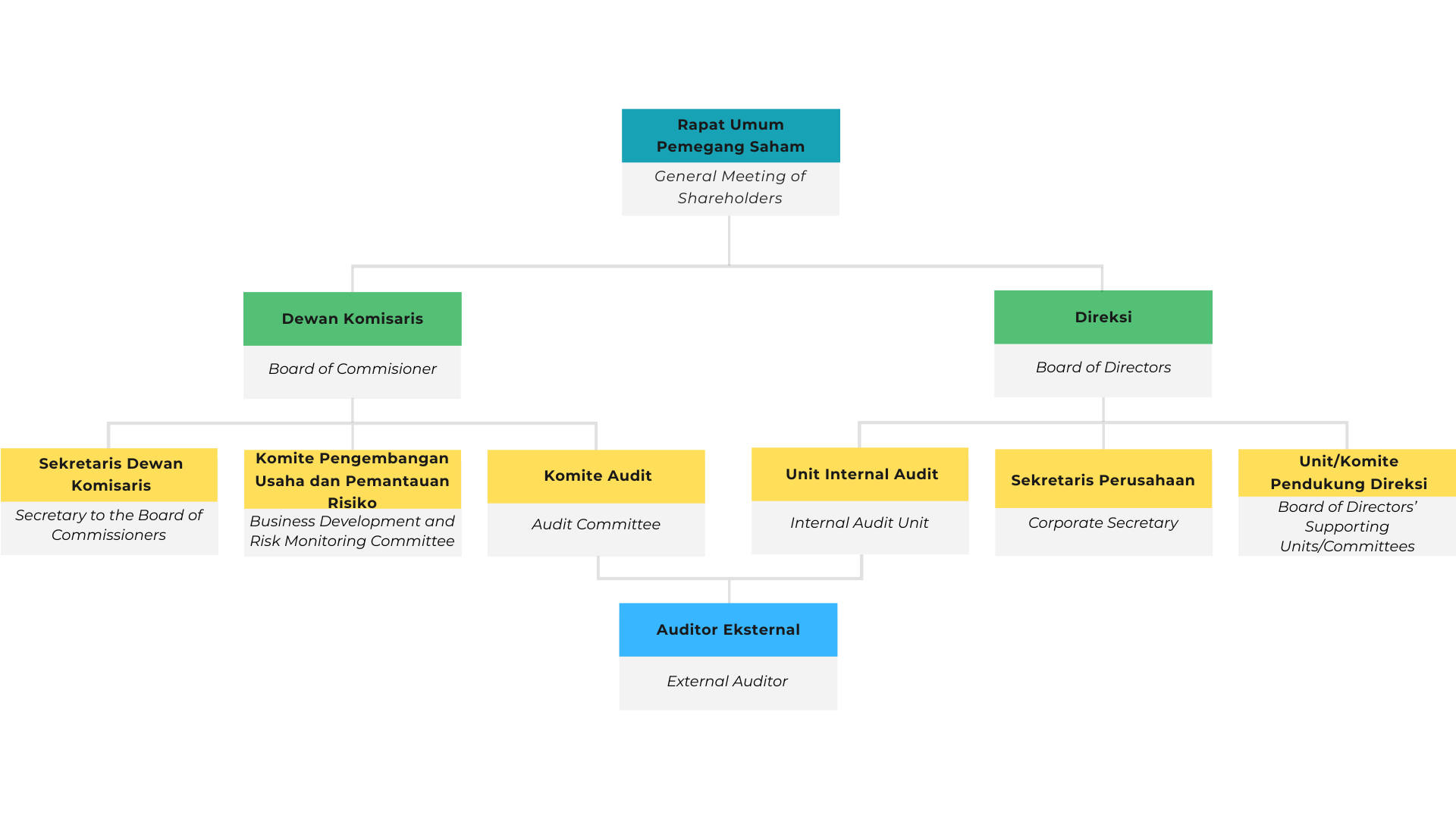
The Company’s governance structure refers to Decree Number: SKEP/DU/6030/AUG/2025 dated August 19th, 2025, concerning Integrated Governance Guidelines within the Head Office of PT Gapura Angkasa, under which the Company’s organs consist of three main elements:
- Shareholders through the General Meeting of Shareholders (GMS), which serves as the highest decision-making forum for the Shareholders.
- The Board of Commissioners, responsible for supervising the management of the Company.
- The Board of Directors, responsible for managing the Company’s operational activities.
Each corporate organ performs its function based on the principle of independence, with duties, functions, and responsibilities carried out solely in the best interest of the Company.
In carrying out its operational activities, the Board of Commissioners and Board of Directors establish sub-organs to support operational effectiveness and provide strategic input for the Company’s development. The establishment of these sub-organs also aims to clarify the division of authority and responsibility in implementing the fundamental principles of Good Corporate Governance (GCG) effectively.
Board of Commissioners
To strengthen the supervisory function, the Board of Commissioners has established:
- Secretary of the Board of Commissioners;
- The Audit Committee; and
- The Business Development and Risk Monitoring Committee.
These committees assist the Board of Commissioners in performing its duties and responsibilities, providing recommendations and input in policy formulation within their respective scopes. In addition, the Board of Commissioners is supported by the Secretary to the Board of Commissioners in administrative and documentation matters.
Board of Directors
In performing its management functions, the Board of Directors is supported by several units responsible for controlling, monitoring, and ensuring consistent implementation of GCG principles. These work units also serve as partners to the committees under the Board of Commissioners.
The work units reporting directly to the Board of Directors include:
- Corporate Secretary;
- Internal Audit Unit;
- Board of Directors Supporting Unit/Committee.
These three units play an essential role in maintaining effective oversight, ensuring regulatory compliance, and strengthening a culture of good governance throughout the organization.
The Audit Committee, under the Board of Commissioners, plays a role in overseeing and ensuring the effectiveness of internal control functions and the reliability of financial reporting. The Internal Audit, which reports to the Board of Directors, maintains a functional relationship with the Audit Committee, where internal audit results are utilized as materials for supervision and evaluation by the Committee. Meanwhile, the Audit Committee also coordinates with the External Auditor in reviewing financial statements and ensuring the independence of the audit process.
Implementation of Good Corporate Governance
The implementation of Good Corporate Governance (GCG) represents the Company’s fundamental commitment to ensuring sustainable business growth. For the Company, good governance is not only aimed at achieving short-term performance but also at guaranteeing long-term business continuity.
The Company continuously strives to strengthen GCG implementation through policy updates, procedural improvements, and enhanced oversight effectiveness. In addition, various socialization and internalization programs are carried out continuously for all employees to ensure that governance principles are not merely rules but become an ingrained work culture reflected in every activity.
The Company believes that consistent application of GCG will reinforce its reputation as a Good Corporate Citizen and maintain stakeholder trust.
Concrete forms of GCG implementation carried out by the Company include:
- Updating and aligning governance structures and guidelines, such as the Strategic Investment and Corporate Action Guidelines, Board of Management Meeting Guidelines, Code of Conduct Guidelines, Integrity, Transparency, and Compliance Guidelines, Integrated Governance Guidelines of PT Gapura Angkasa, Board of Directors’ Working Rules, and their derivative procedures (Whistleblowing System Procedure, Anti-Bribery Management System Procedure, Gratification Procedure, and State Official Wealth Reporting Procedure).
- Conducting periodic signing of the Integrity Pact and Business Ethics Guidelines by all Gapura personnel as a manifestation of commitment to integrity and professionalism.
- Establishing various supporting teams to ensure the effective implementation of GCG practices.
- Carrying out regular assessments, both through external assessments and internal evaluations, to measure the effectiveness of GCG principle implementation.
Company Policy Manual
Integrated Governance Guidelines
Integrated Governance Guidelines are a reference framework that regulates the integrated application of Good Corporate Governance (GCG) principles.
Code of Conduct Guidelines
The Code of Conduct Guidelines are a set of commitments consisting of Business Ethics and Code of Conduct containing obligations and prohibitions that must be avoided by PT Gapura Angkasa and PT Gapura Angkasa personnel.
Integrity, Transparency, and Compliance Guidelines
The Guidelines serve as a clear reference regarding:
- Gratification Control:
Gratification refers to the act of giving and/or receiving gifts, souvenirs, or entertainment, whether received domestically or abroad, and whether conducted through electronic means or otherwise, by employees and company officials in connection with their authority or position within the Company, which may lead to conflicts of interest affecting independence, objectivity, or professionalism. - Reporting of State Officials’ Asset Declaration (LHKPN):
The reporting of the State Officials’ Asset Declaration (LHKPN) is an obligation for the Board of Directors and the Board of Commissioners of PT Gapura Angkasa to report all of their assets to the Corruption Eradication Commission (KPK). - Implementation of the Anti-Bribery Management System (SMAP):
The implementation of the Anti-Bribery Management System (SMAP) is PT Gapura Angkasa’s effort to prevent, detect, and address acts of bribery. - Implementation of the Whistleblowing System (WBS):
The implementation of the Whistleblowing System (WBS) establishes a reporting mechanism that allows employees or external parties to report alleged violations, fraud, or unethical behavior within PT Gapura Angkasa.
Whistleblowing System
The Whistleblowing System is a mechanism for managing complaints or disclosures regarding unlawful behavior or unethical/improper conduct in a confidential, anonymous, and independent manner. It serves to optimize the participation of PT Gapura Angkasa personnel and other parties in revealing violations that occur within the Company.
In order to realize the implementation of Good Corporate Governance (GCG), PT Gapura Angkasa encourages both internal and external parties to use the reporting channels for suspected violations through independent and confidential complaint channels, referring to the following reporting lines:
Email: Governance.Compliance@gapura.id
PT Gapura Angkasa’s Whistleblowing System Reporting Procedures
Reported Information
The reporter provides information regarding their identity (which may also be submitted anonymously), including:
- Name;
- Address;
- Phone number/mobile number/email;
The violation report must be accompanied by supporting documents.
Reporting Elements
- WHAT: Description of the Violation
- WHO: Alleged violator or other parties who know of or are involved in the incident
- WHERE: Location of the Violation
- WHEN: Date and Time of the Incident
- WHAT EVIDENCE: Evidence of the Violation
- HOW: Chronology of the Violation
Ruang Lingkup Laporan Whistleblowing System
Kategori 1 (Tindak Pidana)
- Pencurian
- Penipuan
- Kecurangan
- Benturan Kepentingan
- Korupsi, Kolusi, dan Nepotisme
- Penyalahgunaan Jabatan untuk Kepentingan Pribadi
- Pengancaman
- Penyelewengan Uang Perusahaan
- Penggelapan Aset Perusahaan
- Penerimaan, Pemberian, dan Permintaan Gratifikasi
- Pembocoran Rahasia Perusahaan
- Pemerasan
Kategori 2 (Nilai, Etika, Disiplin, dan Peraturan Internal)
- Penyalahgunaan Fasilitas Perusahaan
- Pelanggaran Etika dan Perbuatan Asusila
- Pelanggaran Disiplin
Documentation
Stay informed with the latest activity
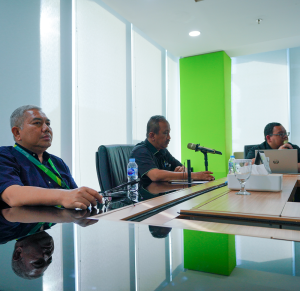
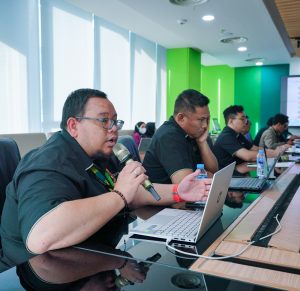
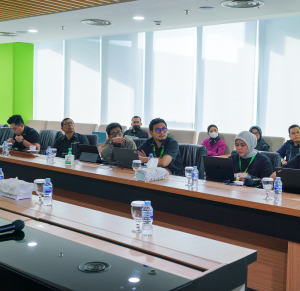
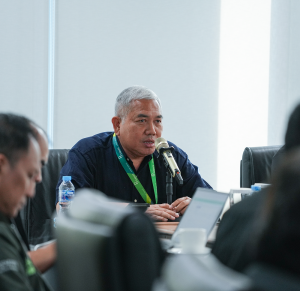
Penyampaian Hasil Penilaian Self Assessment GCG Tahun 2024
Governance & Compliance Unit
Penyampaian Hasil Penilaian Self Assessment GCG Tahun 2024
3 November 2025
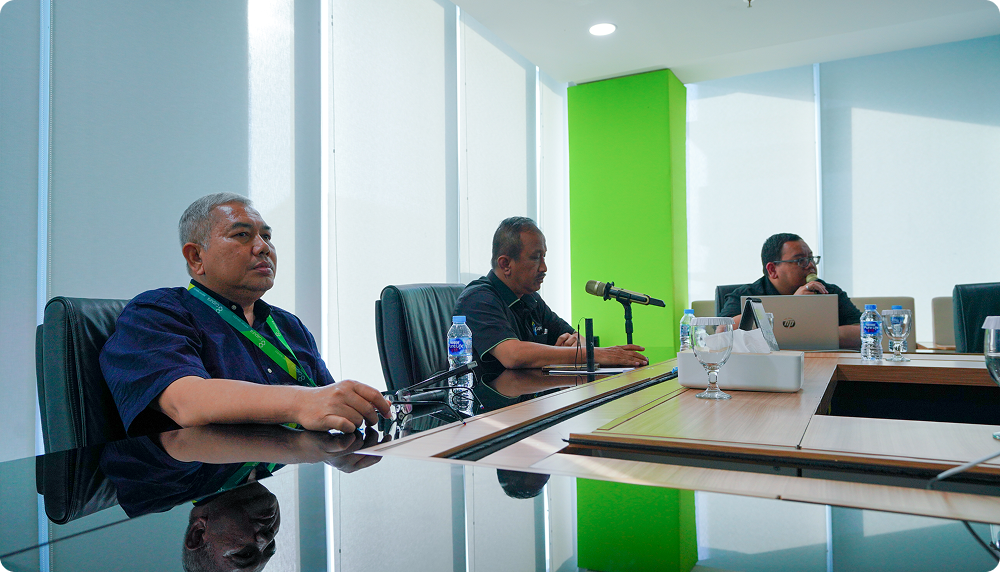
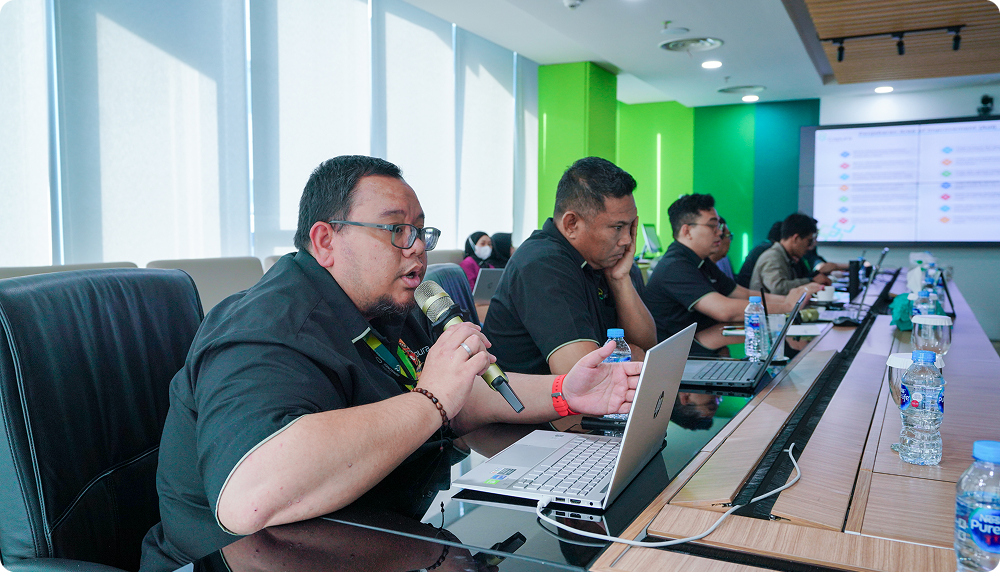
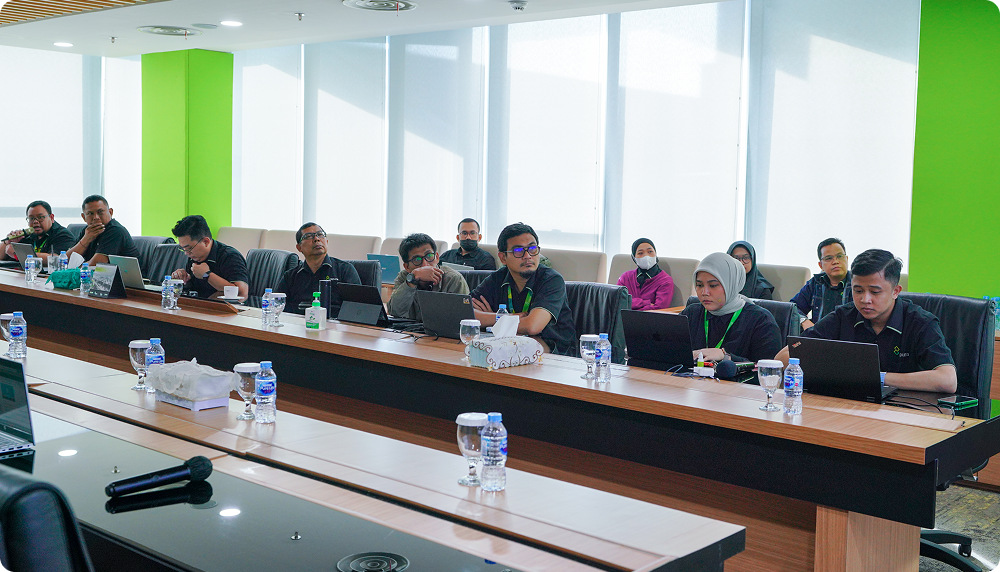
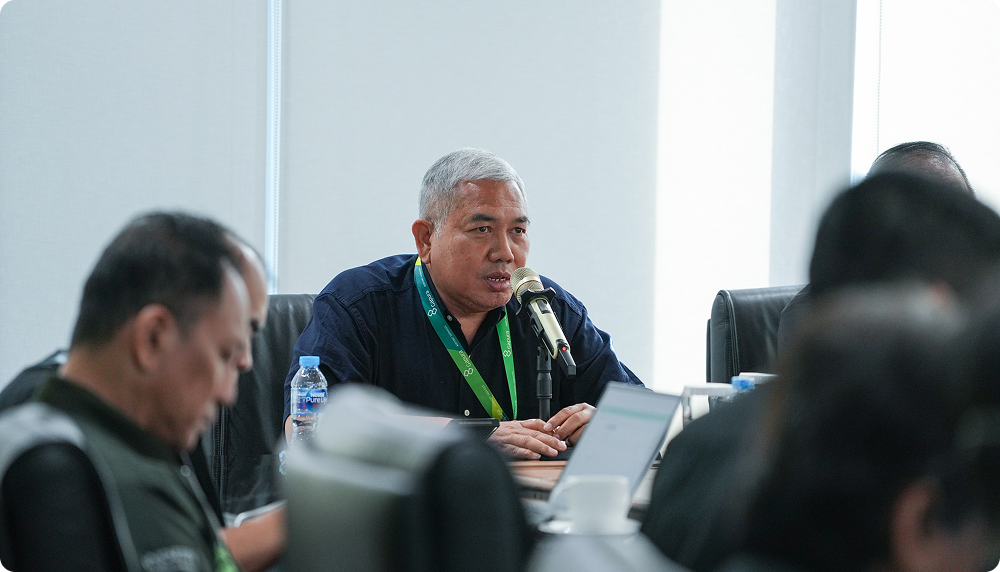
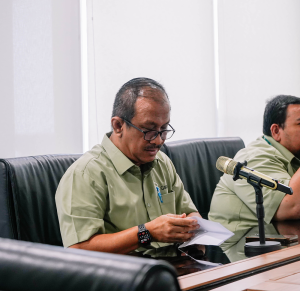
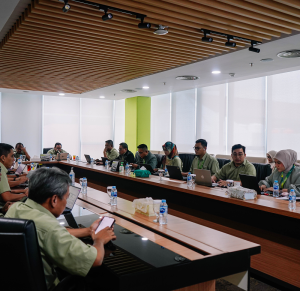
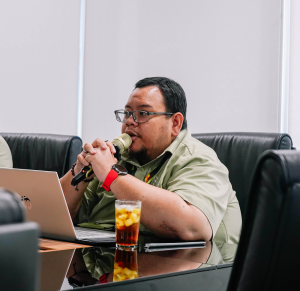
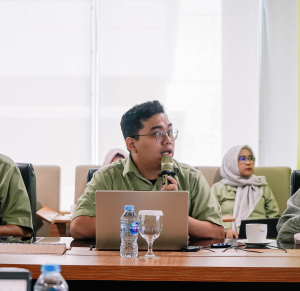
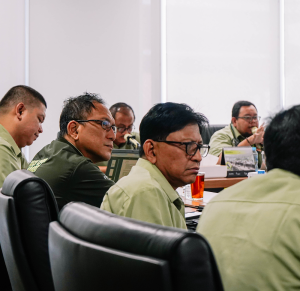
Dalam rangka memperkuat budaya tata kelola yang berintegritas, PT Gapura Angkasa melalui Unit Governance & Compliance telah menyampaikan Hasil Penilaian Self Assessment GCG tahun 2024 kepada manajemen pada tanggal 3 November 2025.
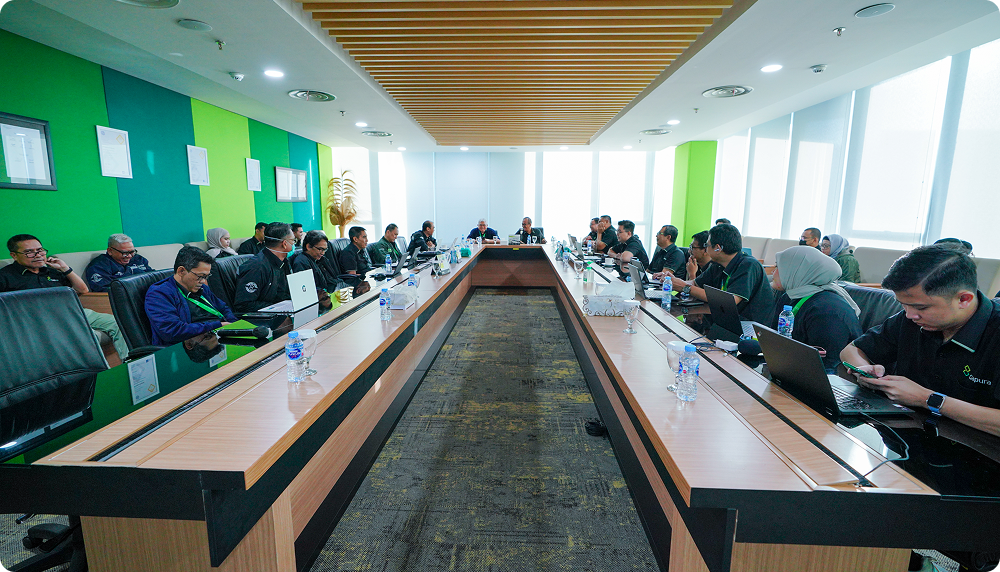
Penyampaian tersebut memberikan insight atas pencapaian perusahaan sekaligus mengidentifikasi area pengembangan yang akan ditindaklanjuti sebagai bagian dari program peningkatan berkelanjutan.
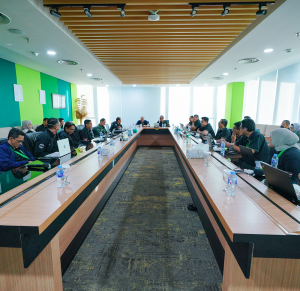
Diseminasi Pedoman GCG Tahun 2025
Governance & Compliance Unit
Diseminasi Pedoman GCG Tahun 2025
19 November 2025
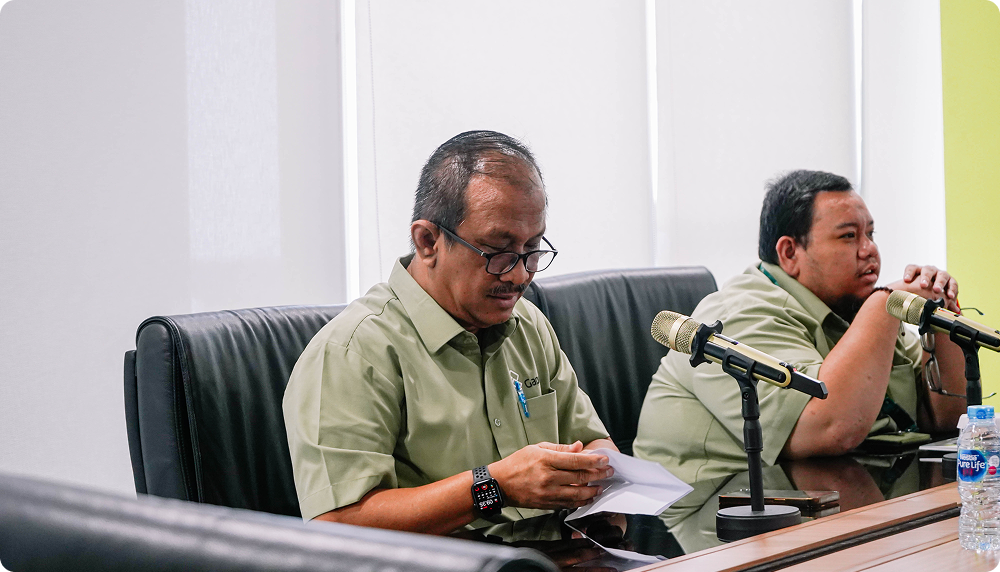
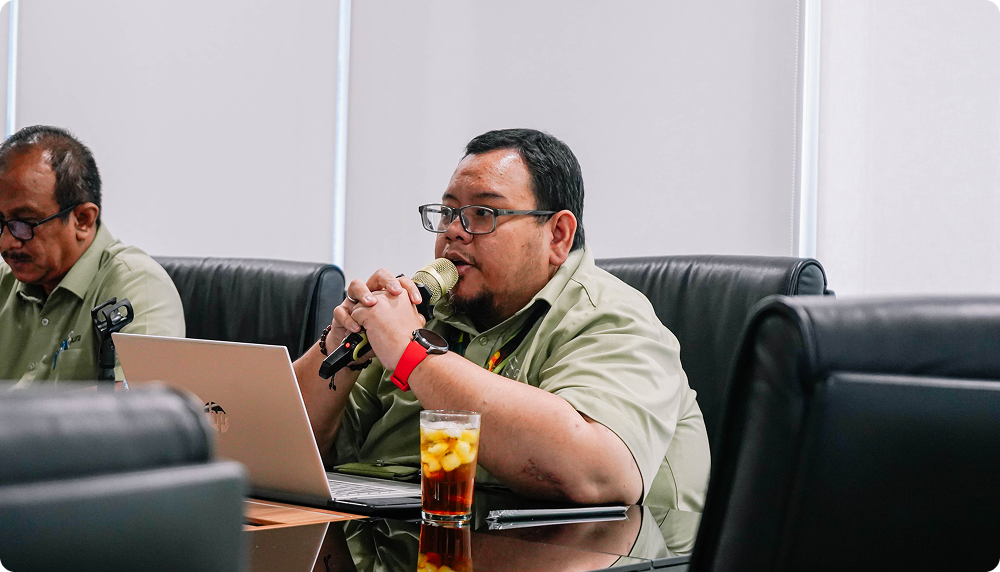
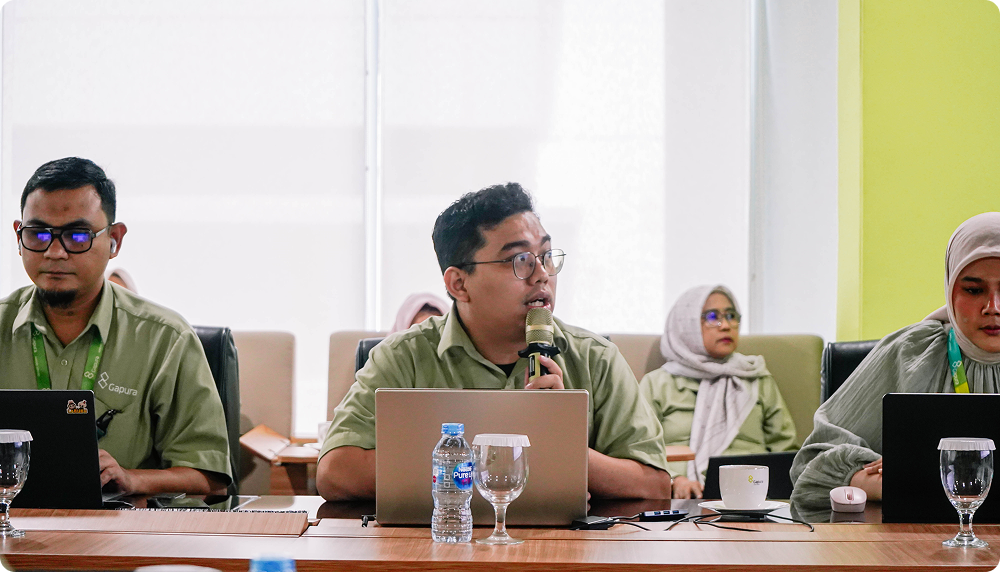
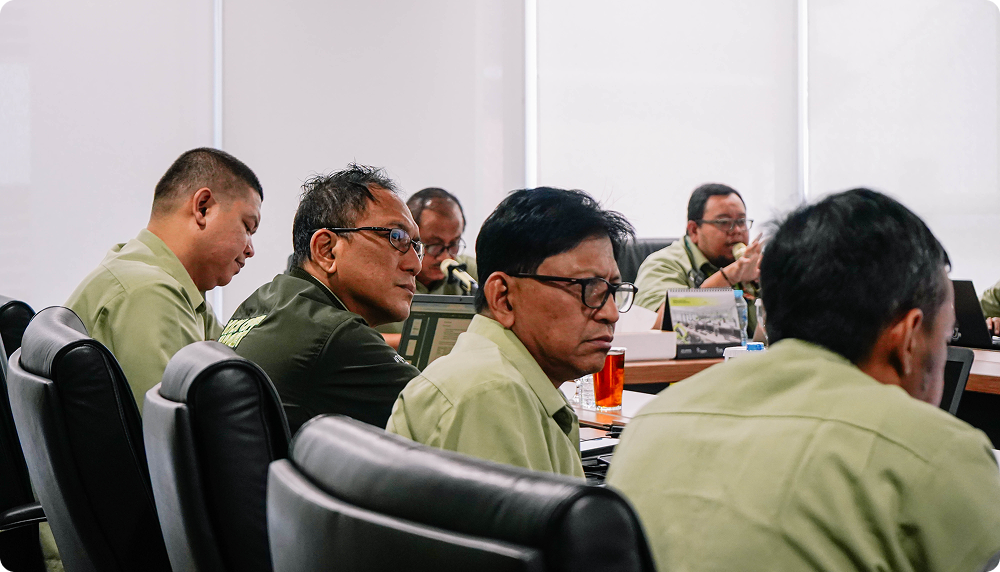
Sebagai bagian dari komitmen PT Gapura Angkasa untuk memperkuat penerapan Tata Kelola Perusahaan yang Baik (GCG), Unit Governance & Compliance PT Gapura Angkasa berhasil menyelenggarakan acara “Diseminasi Pedoman GCG” pada 19 November 2025.
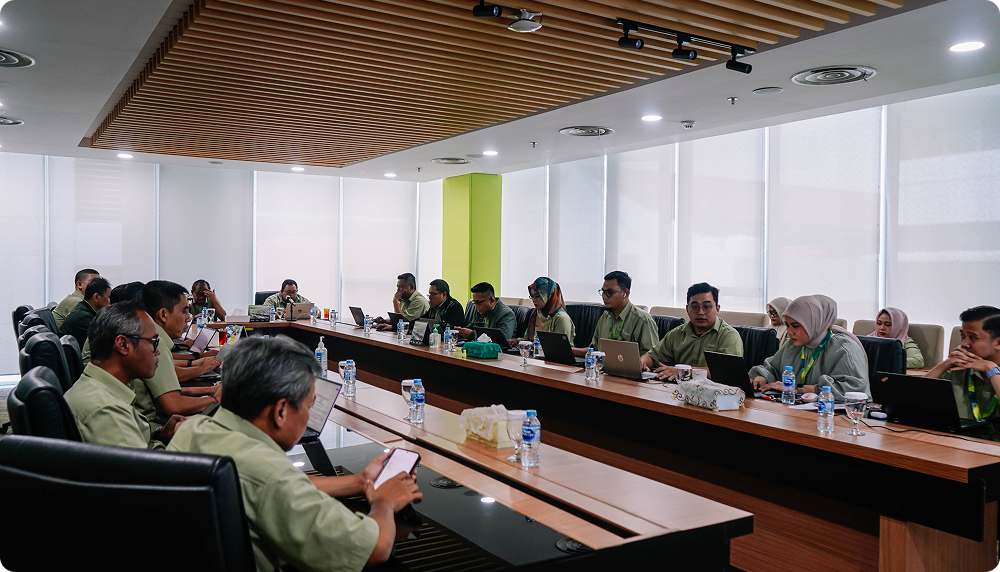
Kegiatan ini menjadi sarana untuk memperluas pemahaman Insan Gapura mengenai prinsip, nilai, dan praktik GCG sehingga dapat diterapkan secara konsisten di seluruh lini perusahaan.